


It does not matter what product you buy, as long as it has got a tag it is sure to carry a bar code, unless it is from a pawn shop or the likes. The first barcode was not used for any product that is available at the super market. It was used to label railroad cars.
It was not until June 26th 1974 that the bar code was used for the first time in a commercial setting. From then on, bar codes became a popular way of assigning universal product codes or UPCs to products from around the world. Each code can be divided into three parts, which are:
- A country code
- Company code and
- Product code
Applications of Barcode
It took almost two decades before the bar code was accepted at a commercial level. Once it was accepted, many critics believed that the product would not last very long. However, bar codes helped the grocery industry save millions of dollars. This made the manufacturers think about the versatile use of bar codes.
Retail outlets now have retail membership cards that are exclusive to the store. These cards have bar codes that are helpful in identifying a consumer. Once a customer is uniquely identified, it is easy for the retail shop to understand the customer’s shopping patterns. Along with this, customized marketing strategies can be applied easily. These help shoppers avail discounts and special offers on products.
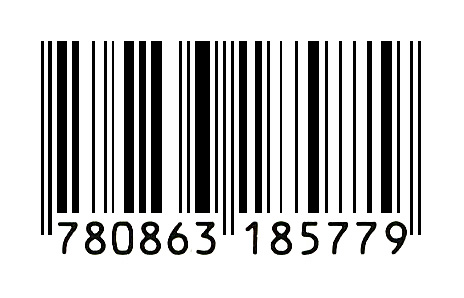
Another industry that uses bar codes extensively is the health care industry. Not only are the medical products (including medicines) managed with the use of bar codes but patient records (medical history, drug allergies, patient’s data, etc.) and patient identification is also done using bar codes.
Bar codes can also be used to keep track of nuclear waste, rental cars, parcels, express mail and registered mail. Tickets with bar codes allow the ticket holder to enter theatres, sports arenas, fairgrounds, cinemas and public transport. It can also be used to record the entrance and exit of different vehicles from a rental facility.
It is also used in few kinds of 1D and 2D position sensors that are non-contact. 2D bar codes have more information than 1D bar codes in general. A 1D bar code is basically a set of lines of variable length and can be easily read by any infrared sensor. 2D bar codes are slightly different. They appear in a matrix form and consist of square dots that are of variable sizes. These bar codes are read with a raster-scanning beam sensor.
The Advantage of Bar Codes
- It does not matter how ‘long’ the bar code is as there is no information in any of them. However, the height does make it easy to read the information.
- 2D bar codes can contain up to 500 bytes of data per square inch.
- A 2D bar code can be used to hold different types of biometric data like a compressed version of the owner’s portrait or fingerprint.
Other information that can be carried in the bar code includes personal data like name, employee number, department, address, designation and expiration. One important thing to remember is that 1D bar codes can wear easily. However, 2D bar codes overcome this issue and can withstand holes, dirt marks and cuts.
It may seem easy to copy bar codes because they are just a bunch of lines or dots that can be printed with just about any printer that has got black ink. But it is important to remember that it is not that easy. A K Panel is required when bar codes have to be printed on plastic cards. The K Panel or Black Resin is opaque to all infrared and visible sensors.
Security is the biggest concern when it comes to barcodes. To avoid the bar code from being photocopied easily, the bar code can be printed on a dark YMC color panel such that photocopying it is not possible. There are printers available that specially print ID cards with bar codes. These ID card printers can help companies generate secure access and avoid any unauthorized entry.