

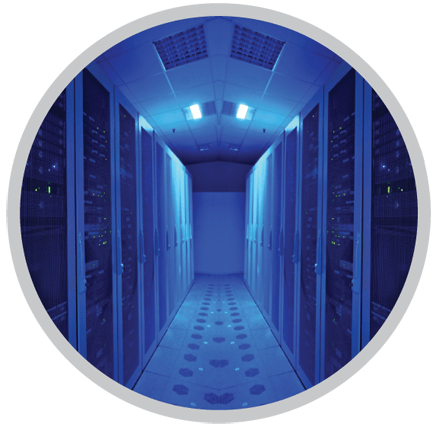
Building an efficient data center requires significant analysis of a number of factors, including number and type of servers, expected power usage, cooling requirements, airflow design, footprint, layout, cabling paths and more, according to Steven Leidig, Crenlo’s enclosure engineering manager.
All data centers will need to take different issues into consideration because every customer’s needs are different. Consider the following tips on some basic data center design factors.
Space
Conventional wisdom says that everything is shrinking, and space needs will be less, not more, over time. “With repairs and upgrades, the more physical space you have, the quicker these tasks will happen,” said Mike Honeycutt, a consultant on information technology. Honeycutt recommends least 18 inches of crawl space under the floors for cables. “In addition to IT personnel, remember maintenance staff (janitors, plumbers, etc.) will be in the room and additional space will mean they are less likely to cause problems.”
Cooling
For cooling equipment, it is all about keeping the cooling equipment running at its most efficient point. One option would be to increase the temperature in the data center, so the cooling equipment won’t need to work as hard and will use less energy. Also, minimizing airflow restrictions and simplifying piping design can maximize fan and pump motor efficiencies.
Energy Efficiency
The IT equipment should have some type of power management protocol that puts idle servers into a low power state or turns them off completely, according to Bill Kosik, Principal Data Center Energy Technologist, Technology Services with HP. The largest power loss in an electrical system is the uninterrupted power supply (UPS) system. High reliability/low efficiency designs typically have the highest losses, in the range of 12 percent to 15 percent. On the other end, lower reliability/higher efficiency systems that use techniques such as off-line UPS systems will have losses of 5 to 10 percent. “Keep in mind these are estimates, but they can be used as indicators for the beginning of a project to examine efficiency,” Kosik said.
Racks
Racks are often procured with little more information provided to the manufacturer than simply cabinet width and depth. “That’s a sign that either the procurement is taking too early in the design process, or that there is a gap in communication between the designer and the procurement agent,” Leidig said. “This lack of information can lead to significant project delays and the need for costly and time-consuming modifications both before and after installation.”
The placement of IT racks and cabinets, as well as mainframes and legacy equipment, will impact the efficiency and effectiveness of the cooling system.
Physical Security
There should be some degree of physical security for the perimeter of the facility and at the boundaries of the data center site. The facility needs to have protection from weather events, such as tornadoes, hurricanes, floods, sand storms, blizzards and large power outages. In most locations around the world, these types of threats are by far the most common.
A fire suppression system is required, but Honeycutt said that planning for flooding is often forgotten. “Server rooms tend to be on the ground floor. This means they are more vulnerable to outside flooding but also flooding (from bathrooms, frozen pipes, firefighting) on the floors above them.”
Finally, many organizations will need a disaster plan that includes an off-site data center in case the primary data center is destroyed. Ideally, at least once a year, the off-site data center should be tested as thoroughly as possible. Consider running tests in which some of the key personnel are not available to anticipate a communication knock-out.
These tips only begin to address the many needs of designing a data center, but it should at least start the discussion on to create a data center that is meets your needs.